BSI – 5th January, 2026
Gig Economy in India and Its Impact on the Indian Economy
In the gig economy:
-
Work is allocated per task (“gigs”) rather than permanent roles
-
Workers operate as independent contractors or self-employed agents
-
Digital platforms coordinate matching, payment, and reputation
-
Income is variable and linked directly to completed work
Formally, the gig economy represents a shift from standardized, long-term employment toward platform-mediated, flexible labor markets, where labor supply and demand are dynamically matched in real time.
Key Economic Characteristics
-
Labor flexibility: workers choose when and how to work
-
Platform intermediation: coordination via apps and digital networks
-
Decentralized workforce: geographically distributed participants
-
Outcome-based compensation: payment tied to tasks, not time
Digital + Physical Business Model (Online & Offline)
In today’s economy, every business operates on at least one of two sides:
- Offline (physical stores, workshops, kitchens)
- Online (apps, websites, marketplaces)
- Or both
Examples:
- Small handicraft manufacturers selling via marketplaces
- Big cloth merchants using online + offline retail
- Restaurants using dine-in + food delivery platforms
Delivery as the Backbone of Modern Commerce
From artwork delivery to life-saving medicine delivery is now essential:
- A pharmaceutical company delivering medicines
- Restaurants delivering food
- Retailers delivering consumer goods
- A painter delivering artwork
Across all these sectors, delivery partners are essential.
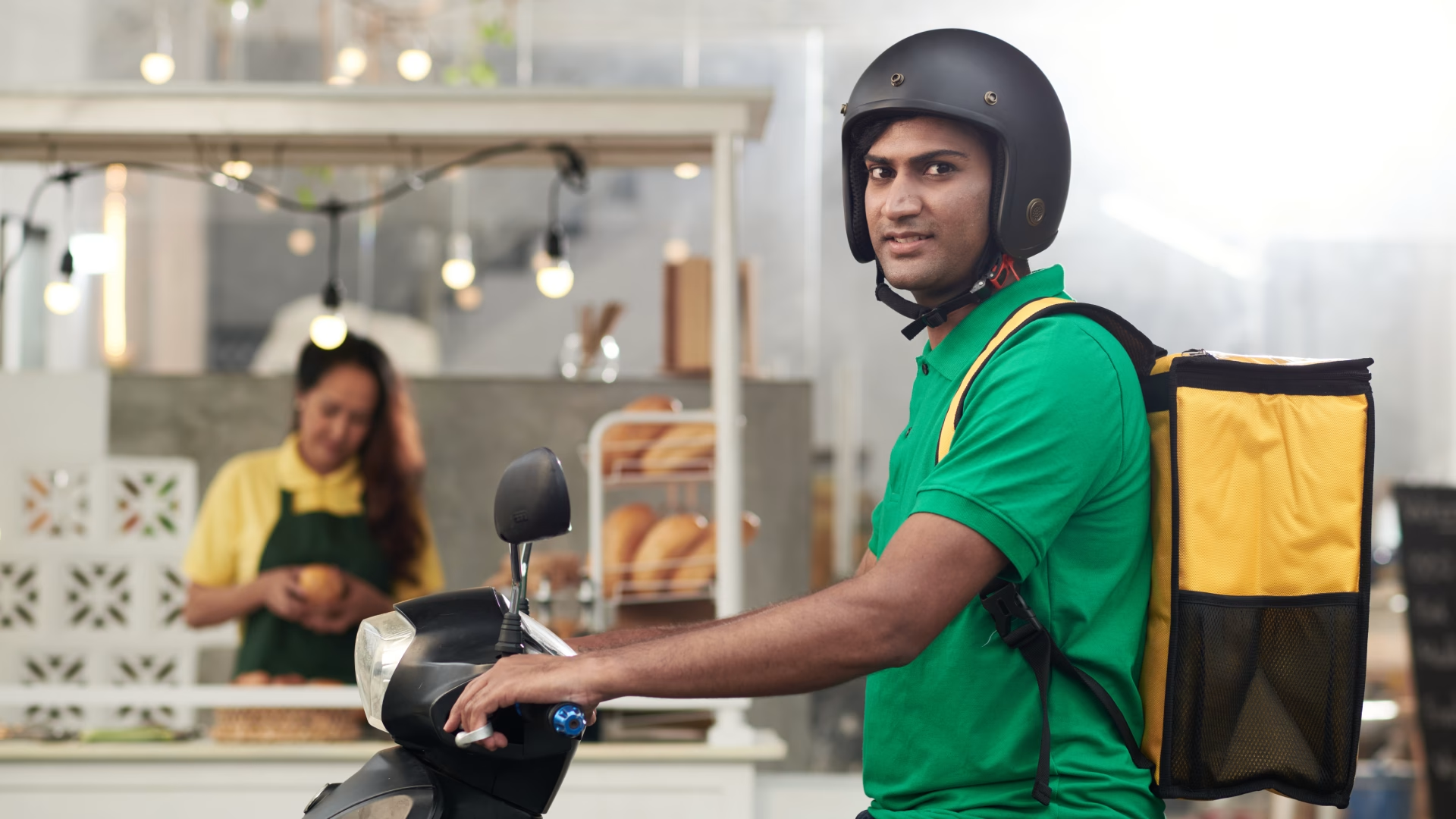
These delivery partners are:
- Independent
- Flexible
- On-demand
- Known as Gig Workers
Role of Gig Workers
- Last-mile connectivity
- Faster commerce
- Business scalability without permanent hiring
- Income generation for millions
They are the connective tissue between Producers and consumers, Small businesses and large platforms, Offline creation and online consumption.
Economic Impact of the Food & Gig Ecosystem
The gig economy plays a critical role in India’s economic engine, particularly in the food and delivery sector.
- Restaurants and cloud kitchens generate business revenue
- The government earns GST and other taxes
- Chefs, kitchen staff, and restaurant workers gain direct employment
- Delivery partners (gig workers) gain flexible income opportunities
This creates a multi-layered employment cycle that benefits individuals, businesses, and the government simultaneously.
Food Business as an Accessible Entrepreneurial Opportunity
Unlike capital-intensive industries, the food business is not heavily financially oriented at the entry level.
- Opening a restaurant or cloud kitchen requires moderate capital
- Commercial space can be small or shared
- Anyone passionate about food can enter the market
- Cloud kitchens reduce overheads and lower entry barriers
This democratizes entrepreneurship and encourages self-employment and MSME growth. The gig economy in India enables inclusive growth by connecting small businesses, food entrepreneurs, and manufacturers to customers through flexible delivery and employment models.