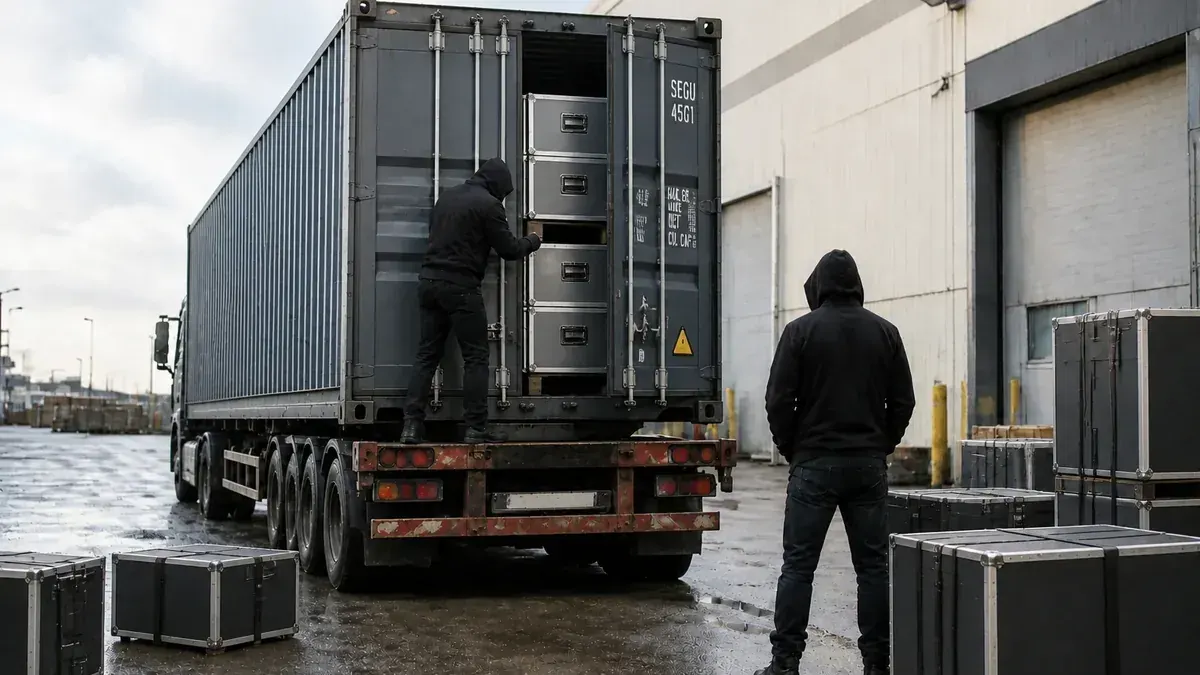
The recent theft involves six pallets of high-end NVIDIA hardware valued at $11.4 million (part of broader reports citing over $100M in overall tech freight targeted nationwide). Shipped from Oakland, California to Fort Worth, Texas, the shipment vanished through a fictitious pickup—where thieves posed as an authorized freight carrier using a disguised truck.
This incident underscores a major turning point: cybersecurity is no longer just about software, smart contracts, or crypto exploits. Physical compute assets have become the ultimate high-value contraband because GPUs function as hard currency on global black markets, often selling at a premium overseas.
Protecting AI and hardware infrastructure requires bridging physical logistics with cryptography, firmware security, and AI-driven monitoring.
1. Hardware & Firmware Security (Cryptographic Defenses)
- Hardware Root of Trust (RoT) & Remote Attestation: Modern enterprise compute (e.g., NVIDIA Hopper/Blackwell) integrates cryptographic chips (such as TPMs and silicon-level Hardware RoT). Even if physical silicon is stolen, devices can be configured to require remote cryptographic attestation during initial boot or cluster join. Without a cryptographically signed license or activation certificate from an authorized vendor server, the board refuses to decrypt firmware and remains an inoperable paperweight.
- Silicon Fingerprinting & Physical Unclonable Functions (PUFs): PUFs exploit microscopic physical variations in the silicon lattice to generate unique, unclonable cryptographic keys. These allow data centers and clouds to verify hardware identity and detect unauthorized board-level tampering or substitution.
- Encrypted Firmware & Kill Switches: Secure boot pipelines prevent unauthorized flashing or execution of modified drivers. If a serial number is flagged as stolen, central vendor infrastructure can permanently revoke validation certificates, blocking remote updates, management fabric access, and telemetry activation.
2. Supply Chain & In-Transit Custody
- Zero Trust Logistics Verification: Fictitious pickups exploit identity weaknesses in freight brokerage portals. Carriers must move away from easily forged paper BOLs (Bills of Lading) toward cryptographically signed digital credentials (e.g., multi-party cryptographic tokens generated at pickup that match the driver's biometric identity and carrier authority).
- Multi-Modal Cryptographic Geofencing & IoT Seals: High-value transit pallets should carry cellular/satellite-linked IoT trackers embedded with tamper-evident cryptographic seals. If a container deviates from an authorized corridor, makes unscheduled multi-hour stops, or registers seal severance, automated silent alerts trigger immediate carrier intervention and law enforcement alerts.
- Decentralized Provenance Tracking: Hardware Bills of Materials (HBOM) recorded on tamper-proof ledgers verify every hop from fabrication foundry to packaging, freight handoffs, and final rack deployment.
3. AI-Driven Threat Detection & Operations
- Supply Chain Anomaly Detection: AI models trained on freight movement patterns can flag fraudulent carrier profiles, spoofed motor carrier numbers, route deviations, and suspicious pick-up timing before physical handoff occurs.
- Secondary Market & Telemetry Scrapers: Stolen enterprise hardware eventually attempts to connect to networks, run diagnostics, or appear on resale/broker channels. AI scrapers cross-reference serial numbers against gray-market listings and watch for telemetry pings when systems are powered on.
If you're securing high-value hardware, logistics or compute infrastructure, our blockchain, AI and supply chain teams can help — talk to us.